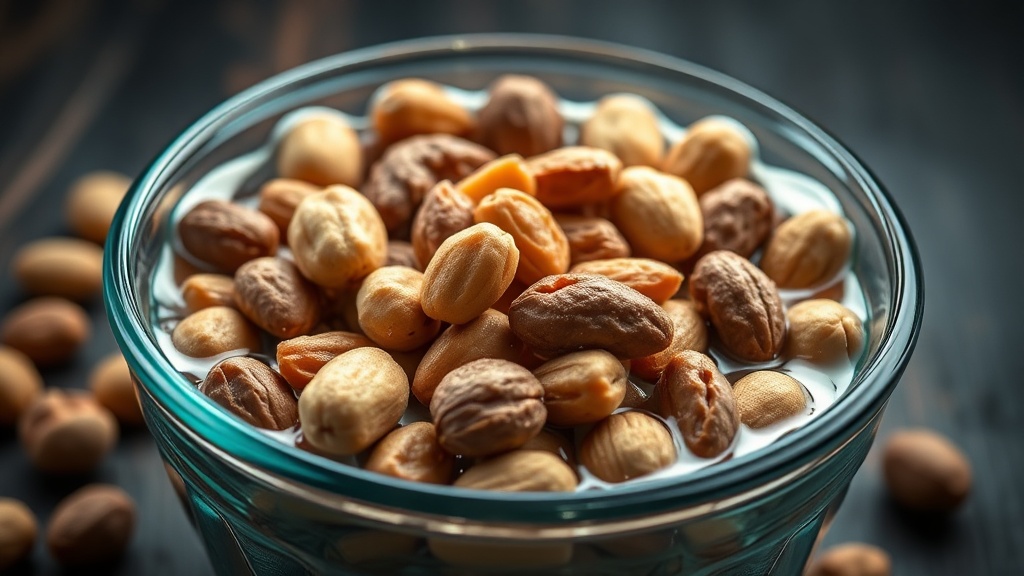
Soak Your Nuts Overnight for Better Mineral Absorption

Quick Tip
Soaking nuts overnight in salted water neutralizes phytic acid and makes their minerals far more bioavailable.
Soaking nuts overnight improves mineral absorption by reducing phytic acid — a natural compound that binds zinc, iron, and calcium in the digestive tract. Here's the thing: a simple bowl of water can unlock more nutrition from almonds, walnuts, and cashews without changing the grocery list. It's a small habit with a real payoff for anyone focused on getting more from whole foods. You don't need special equipment, just a jar and a little patience.
Why soak nuts before eating them?
Raw nuts contain phytic acid, an antinutrient that limits how much magnesium, zinc, and iron the body actually absorbs. Soaking activates enzymes that break down phytic acid, making those minerals more bioavailable. (Think of it as pre-digesting the hard work so the gut doesn't have to.) Research from the National Institutes of Health confirms that traditional soaking and fermenting methods significantly reduce antinutrient levels in seeds and nuts. That said, soaking doesn't eliminate phytic acid entirely — it simply lowers it enough to improve uptake.
What is the best way to soak nuts overnight?
The process is simple. Place raw nuts in a glass Mason jar, cover with filtered water, and add a teaspoon of fine sea salt — Redmond Real Salt works well here. Let them sit at room temperature for 8 to 12 hours. In the morning, drain and rinse thoroughly in an OXO Good Grips colander, then spread on a baking sheet to dry or use a dehydrator set to 115°F. Worth noting: roasted nuts from the bulk bin at Whole Foods Market won't sprout, so always start with raw. If you don't have a dehydrator, a low oven works, though it may darken the nuts slightly.
Which nuts benefit most from soaking?
Almonds, walnuts, and Brazil nuts show the biggest drop in phytic acid after soaking. Cashews and macadamias also improve, though they need less time. Not all nuts require the same soak time — almonds are dense and benefit from a full twelve hours, while softer nuts like cashews turn mushy if left too long.
| Nut | Soak Time | Key Mineral Unlocked |
|---|---|---|
| Almonds | 12 hours | Magnesium |
| Walnuts | 8 hours | Omega-3s + Zinc |
| Brazil Nuts | 8 hours | Selenium |
| Cashews | 4–6 hours | Iron |
| Macadamias | 2–4 hours | Thiamine |
Does roasting nuts have the same effect as soaking?
Roasting reduces some phytic acid, but it doesn't improve mineral absorption the way soaking does. High heat damages the enzymes needed to break down antinutrients, and it can oxidize the delicate fats in walnuts and pecans. If you prefer a toasted flavor, soak first — then roast at a low temperature (under 150°F) after they're fully dry. The texture will be crisper and the flavor deeper.
Store soaked nuts in the refrigerator for up to three days, or dry them completely and keep them in an airtight container — they'll last weeks. For more detail on mineral bioavailability, see Harvard T.H. Chan School of Public Health. The catch? Once you taste the creamier texture of soaked almonds, the raw crunch from the bag might never taste the same. Try adding them to morning oatmeal or blending them into a smoothie — the difference is noticeable.